
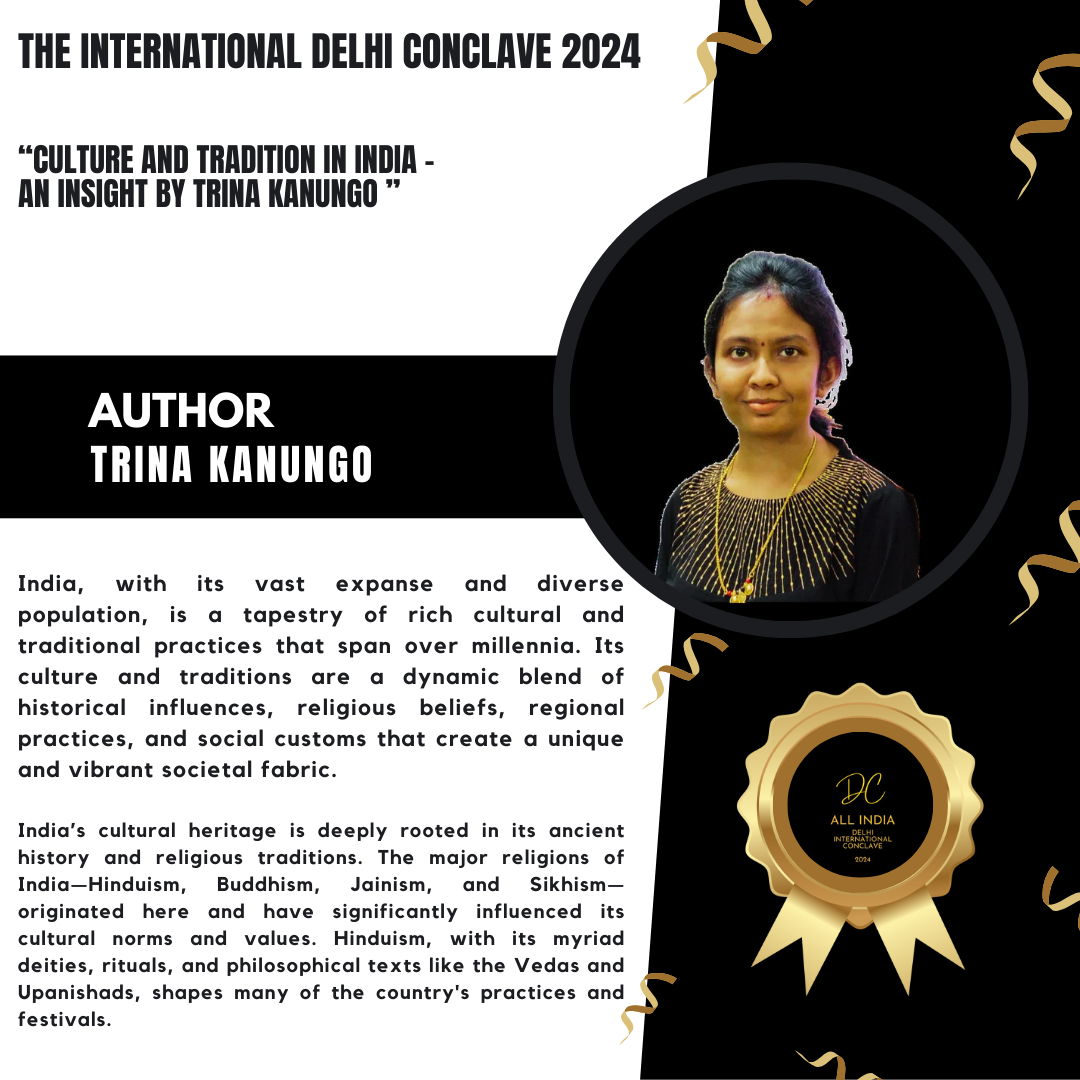
Culture and tradition in India – An Insight by Trina Kanungo
India, with its vast expanse and diverse population, is a tapestry of rich cultural and traditional practices that span over millennia. Its culture and traditions are a dynamic blend of historical influences, religious beliefs, regional practices, and social customs that create a unique and vibrant societal fabric.
Historical and Religious Foundations
India’s cultural heritage is deeply rooted in its ancient history and religious traditions. The major religions of India—Hinduism, Buddhism, Jainism, and Sikhism—originated here and have significantly influenced its cultural norms and values. Hinduism, with its myriad deities, rituals, and philosophical texts like the Vedas and Upanishads, shapes many of the country’s practices and festivals. Buddhism, founded by Siddhartha Gautama (the Buddha), emphasizes the path to enlightenment and has contributed to India’s spiritual landscape. Jainism, with its principles of non-violence and asceticism, and Sikhism, with its emphasis on equality and devotion to one God, also play crucial roles in shaping Indian culture.
Festivals and Celebrations
Festivals are a cornerstone of Indian tradition, reflecting the country’s religious diversity and regional variations. Diwali, the festival of lights, is celebrated across India with fireworks, oil lamps, and sweets. Holi, the festival of colors, is marked by vibrant celebrations where people throw colored powders and water at each other. Eid, marking the end of Ramadan, is celebrated with special prayers, feasts, and charitable giving. Navratri and Durga Puja honor the divine feminine through fasting, dancing, and elaborate rituals. These festivals, among others, foster community spirit and bring people together, transcending regional and religious boundaries.
Art and Music
Indian art forms are as diverse as its festivals. Classical music and dance, such as Kathak, Bharatanatyam, Odissi, and Kathakali, have ancient origins and are characterized by intricate gestures, expressive storytelling, and devotional themes. Indian classical music is divided into two main traditions: Hindustani (North Indian) and Carnatic (South Indian), each with its unique style and repertoire. Additionally, folk traditions like Bhangra from Punjab and Garba from Gujarat add local flavor to India’s cultural landscape.
Cuisine
Indian cuisine is a vivid representation of its culture and diversity. The culinary traditions vary significantly across regions, with each area having its own distinctive ingredients and cooking methods. In the North, rich, creamy dishes like butter chicken and various types of bread (naan, paratha) are popular, while South Indian cuisine features rice-based dishes such as dosa and sambar, accompanied by an array of spicy chutneys. The use of spices and herbs, such as turmeric, cumin, and coriander, is a hallmark of Indian cooking, contributing to its complex and vibrant flavors.
Family and Social Structure
Traditional Indian society places a strong emphasis on family and community. The extended family system, where multiple generations live together, is still common in many parts of India. Respect for elders, familial duty, and social harmony are deeply ingrained values. Marriage is considered a significant milestone and is often arranged by families, reflecting the cultural importance of kinship ties and societal stability.
Clothing and Attire
Traditional clothing varies by region, with distinct styles for men and women. In the North, women commonly wear sarees or salwar kameez, while in the South, sarees are also prevalent but often in different draping styles. Men might wear kurta-pajamas or dhotis. In urban areas, western attire has become more common, blending with traditional dress in various ways.
Modern Influences
While traditional practices remain vital, contemporary India is also shaped by globalization and modernization. The fusion of traditional and modern elements is evident in various aspects of life, from fashion and technology to business and entertainment. Bollywood, India’s film industry, is a global phenomenon that mixes traditional storytelling with modern cinematic techniques.
In summary, India’s culture and traditions are a harmonious blend of historical depth, religious diversity, regional uniqueness, and modern influences. This intricate tapestry reflects the country’s ability to preserve its heritage while adapting to the changing global landscape


