
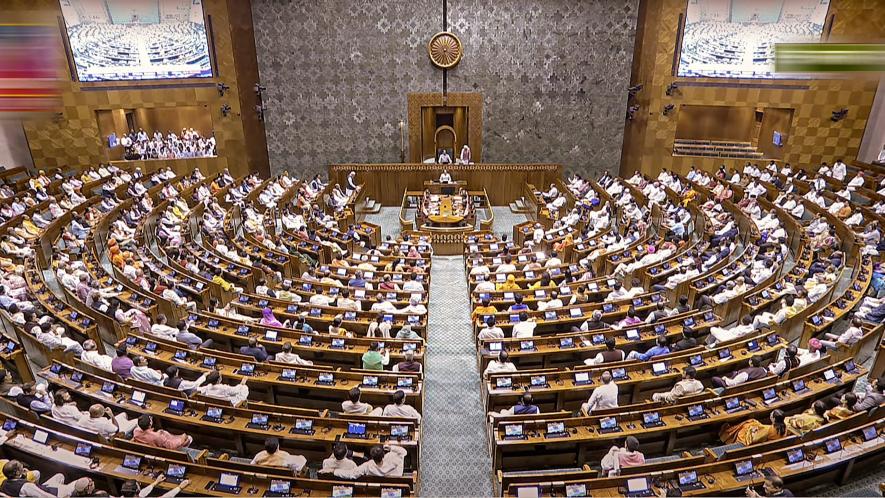
By voice vote, the Lok Sabha approves four bills, and the criminal code’s “Trial in Absentia” clause is added.
These bills will replace the Indian Penal Code-1860, the Code of Criminal Procedure Act-1898, and the Indian Evidence Act of 1872, respectively.The Lok Sabha on Wednesday passed three bills to replace the colonial-era criminal laws, by voice vote. The three bills were introduced by home minister Amit Shah last week. The names of the redrafted bills are — the Bharatiya Nyaya (Second) Sanhita, Bharatiya Nagarik Suraksha (Second) Sanhita and the Bharatiya Sakshya (Second) Bill. It also passed the Telecommunications Bill, 2023, with voice vote.
The Indian Evidence Act of 1872, the Code of Criminal Procedure Act of 1898, and the Indian Penal Code of 1860 will all be replaced by these three legislation.Shah said that discussions preceded the bill’s framing. He claimed that before they were presented before the Lok Sabha, he had even gone over each period and comma.According to him, the three legislation will create an Indian-inspired legal system. He claimed that the current legal system reflects the colonial idea that a crime should be punished but not fairly.”The financial obstacle is the largest obstacle impoverished people face in obtaining justice…’Tareekh pe tareekh’ has continued for years. The police hold the legal system accountable. The government is in charge of the courts and police. The government is being held accountable for the delay by the police and the judiciary. We have clarified a lot of things in the new laws now,” he continued.


Mia Pollard
Thankyou for reading