A Struggle Beyond Economic Deprivation
By Author Shree Shambav
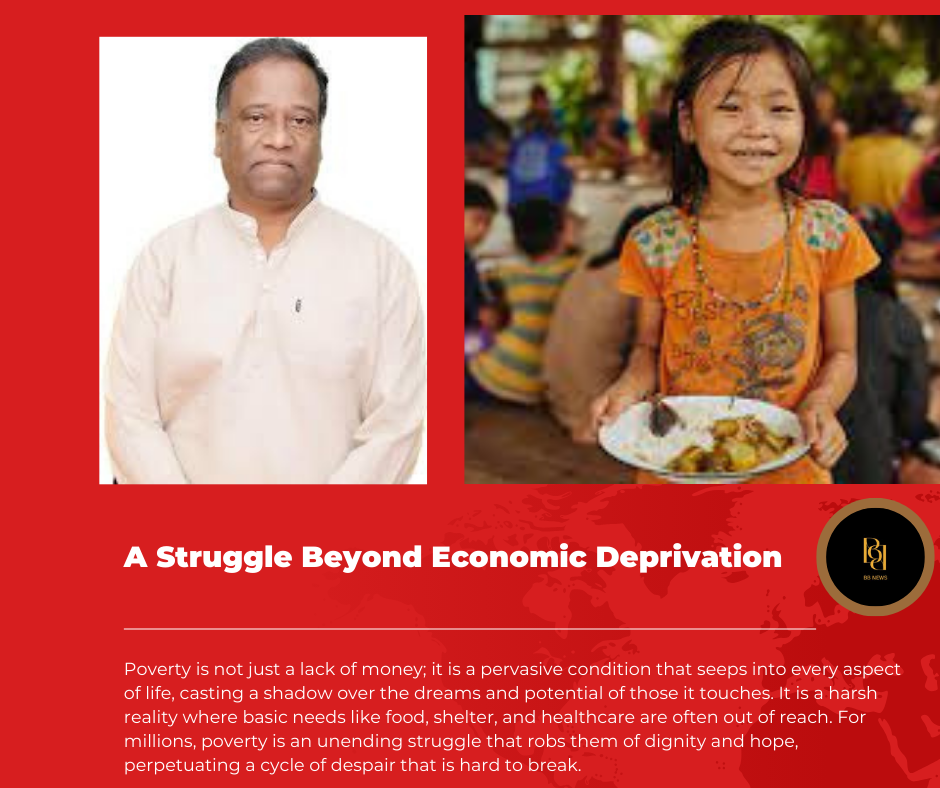
Poverty is not just a lack of money; it is a pervasive condition that seeps into every aspect of life, casting a shadow over the dreams and potential of those it touches. It is a harsh reality where basic needs like food, shelter, and healthcare are often out of reach. For millions, poverty is an unending struggle that robs them of dignity and hope, perpetuating a cycle of despair that is hard to break.
To live in poverty is to navigate a world full of invisible barriers and impossible choices. It’s deciding between feeding your children or paying the rent, between buying medicine or saving for future emergencies. It’s the aching hunger in a child’s belly, the thin clothes that barely protect against the cold, and the dreams that feel perpetually out of reach.
Child Deaths Due to Malnutrition
One of the most devastating aspects of poverty is malnutrition, a silent killer that disproportionately affects children. Imagine a young tree struggling to grow in barren soil—its branches thin, leaves sparse, and roots weak. This is akin to a malnourished child, whose body and mind are deprived of the essential nutrients needed to thrive. According to UNICEF, malnutrition is linked to nearly half of all deaths in children under five years old. These children are at a higher risk of dying from common infections, and their physical and cognitive development is severely hampered, limiting their future opportunities.
Example: In Sub-Saharan Africa, millions of children suffer from chronic malnutrition. This condition leads to stunted growth, weakened immune systems, and a higher susceptibility to diseases. The story of Amina, a five-year-old from Somalia, is a heartbreaking example. Due to prolonged drought and conflict, her family struggled to find enough food. Amina’s growth was stunted, and she frequently fell ill. Despite her parents’ best efforts, Amina passed away from a preventable disease, a stark reminder of the lethal consequences of malnutrition. Her mother’s cries echo through the silent nights, a poignant symbol of a life lost too soon.
Educational Difficulties
Poverty creates significant barriers to education. It’s like trying to climb a mountain with a heavy load on your back—each step is a struggle, and the peak seems unreachable. Children from low-income families often lack access to quality schools, books, and learning materials. They may also need to work to support their families, further hindering their education. This lack of education perpetuates the cycle of poverty, as these children grow up without the skills needed to secure well-paying jobs.
Example: In rural India, many children drop out of school to help their families with agricultural work. Rani, a 12-year-old girl, had to leave school to care for her younger siblings while her parents worked in the fields. Despite her eagerness to learn, the lack of educational opportunities meant that Rani’s future prospects were severely limited. Her dreams of becoming a teacher were overshadowed by the immediate need to support her family, a sacrifice that echoes the silent cries of many children trapped in similar circumstances.
Shelter
Adequate housing is another critical issue for those living in poverty. Picture a house made of fragile paper in a storm—each gust of wind threatening to tear it apart. Many families reside in overcrowded, unsafe, and unsanitary conditions. These environments not only affect physical health but also mental well-being, making it harder for individuals to break free from the cycle of poverty.
Example: In the slums of Rio de Janeiro, thousands of families live in favelas, where houses are built from scrap materials and lack basic amenities like running water and sanitation. For children like Lucas, growing up in such conditions means constant exposure to health hazards and limited space to study and play, hindering their development and future opportunities. The damp, cramped spaces stifle not just physical growth but also the dreams and aspirations of those living within.
Good Society and Safety
A good society is one that provides safety, security, and opportunities for all its members. However, in impoverished communities, safety is often a major concern. High crime rates, violence, and lack of law enforcement are common, making daily life a struggle for survival. It’s like living in a dark forest where every shadow is a potential threat, and the path to safety is obscured.
Example: In many inner-city neighbourhoods in the United States, poverty is accompanied by high crime rates. For children growing up in these areas, like Marcus, the threat of gang violence and drug-related crimes is a daily reality. This environment creates additional stress and trauma, impacting their mental health and ability to focus on education and personal growth. Each day is a battle against the pull of negative influences, and the fear of violence lurks like a persistent storm cloud over their lives.
Poverty, in its many forms, is a thief of potential, dreams, and lives. Each aspect, whether it’s malnutrition, lack of education, inadequate shelter, or the absence of safety, weaves into a complex web that traps millions. Addressing these issues requires not only empathy and understanding but also a concerted effort to dismantle the systemic barriers that perpetuate this cycle of despair.
The Struggle of Shyam
For Shyam, a boy from a lower-middle-class family, poverty was a daily reality. His family lived in a modest city where each day was a challenge to meet basic needs. Shyam’s dreams felt like distant stars, always visible but never within grasp. The towering buildings and shiny cars he saw every day were reminders of a life he couldn’t afford.
Shyam’s longing questions to his teacher about wealth and his own circumstances were answered with a simple yet powerful solution: education. His teacher’s words—“Study well, and these dreams will come true”—became a beacon of hope for Shyam. With unwavering determination, Shyam immersed himself in his studies, seeing education as the key to a better life.
The Broader Picture of Economic Disparity
Shyam’s story reflects a broader systemic issue: the glaring disparity in wealth distribution. This imbalance is often rooted in historical injustices, systemic inequalities, and flawed policies. Access to quality education, healthcare, and economic opportunities is frequently skewed in favour of the affluent, leaving the poor further marginalised.
In Shyam’s city, the contrast was clear. Luxurious homes and high-end cars were not just symbols of wealth; they were stark reminders of the divide between the haves and the have-nots.
Pathways to Alleviating Poverty
Addressing poverty requires a multi-faceted approach that targets the root causes of economic disparity. Key strategies include:
- Investing in Education: Quality education is a crucial stepping stone out of poverty. Policies should ensure access to affordable, high-quality education for all children, irrespective of their socio-economic background. Scholarships, grants, and subsidised programs can bridge the gap for disadvantaged families.
- Healthcare Access: Universal healthcare can lift a significant financial burden from low-income families. Ensuring affordable, comprehensive healthcare services for all citizens is vital.
- Economic Opportunities: Creating jobs through economic development programs, vocational training, and support for small businesses empowers individuals to rise above poverty.
- Social Safety Nets: Strengthening social safety nets—such as unemployment benefits, food assistance, and affordable housing—provides crucial support to those in need.
Reducing Economic Imbalances
- Tackling economic inequality involves concerted efforts from both the public and private sectors:
- Promoting Fair Wages: Ensuring that workers receive a living wage that reflects local living costs can reduce income inequality.
- Supporting Small Businesses: Providing grants, loans, and technical assistance to small businesses, particularly in underprivileged areas, fosters economic growth and job creation.
- Encouraging Philanthropy: Motivating wealthier individuals and corporations to invest in community development and social causes can help bridge economic divides.
- Empowering Communities: Grassroots initiatives that empower communities to take control of their economic destinies are effective. Supporting cooperatives, local entrepreneurship, and community-led projects are crucial steps.
- Advocating for Policy Change: Advocacy and activism can drive policy changes that address systemic inequities, promoting economic justice and holding the powerful accountable.
Shyam’s Transformation: From Dreamer to Doer
Shyam’s journey from poverty to prosperity showcases the transformative power of education and opportunity. With each academic success, doors opened for him, eventually leading to scholarships, a prestigious university, and a high-paying job. The dreams he once cherished as a child—owning a car, living in a big house, flying in an aeroplane—became realities.
But Shyam’s success came with a realisation: his journey was not just about personal achievement but about creating opportunities for others. He became an advocate for educational reform and supported initiatives that provided vocational training and economic opportunities for low-income families.
Shyam’s story highlights how education and opportunity can break the cycle of poverty. However, it also underscores the need for systemic change to address the deep-rooted inequalities that perpetuate economic disparity. Poverty is not just a personal struggle but a societal challenge that demands collective action, empathy, and a commitment to justice and equity.
Shyam’s narrative is a testament to resilience and determination, illustrating that with the right support and opportunities, individuals can rise above their circumstances. Yet, it also calls for a broader, systemic approach to tackling poverty, ensuring that others like Shyam have the chance to realise their dreams and contribute meaningfully to society.
Bio:
Shree Shambav emerges as a modern-day Renaissance luminary, showcasing unparalleled mastery across diverse realms. As an acclaimed author, his literary endeavours transcend boundaries, with impactful works such as “Journey of Soul Karma” resonating profoundly with readers worldwide. His transformative initiatives echo his commitment to catalysing positive change, evident in his award-winning titles like “Journey of Soul Karma,” “Twenty + One Series – I and II,” and “Life Changing Journey.”
With a formidable blend of corporate acumen and a fervent dedication to empowerment, Shree Shambav, an esteemed alumnus of prestigious institutions, occupies a unique space in the world of entrepreneurship and coaching. His latest releases, including “Unveiling the Enigma: Death – Light of Life and the Shadow of Death” and “Optimum: Python Series – I Ultimate Guide for Beginners,” mark significant milestones in his literary journey. These works have garnered acclaim and nominations for esteemed awards, such as Salismania, Sahityakosh, Writers Global Feature, The Artist’s International Conclave, Inspiring Global Icon Award, and the International Excellence Award.
In his most recent endeavour, the unveiling of “Death – Light of Life and the Shadow of Death,” Shree Shambav delves into profound existential themes, captivating audiences with his depth and insight. Furthermore, his poetry collection, “Whispers of Eternity Series I,” showcases a poetic prowess that transcends the ordinary, inviting readers on a journey of introspection and transcendence.
Beyond his literary pursuits, Shree Shambav’s philanthropic endeavours shine brightly through the Shree Shambav Ayur Rakshita Foundation, a beacon of hope for global brotherhood and environmental conservation. Recognised and awarded for his unwavering dedication, Shree Shambav epitomises the fusion of knowledge, compassion, and creativity, inspiring a global wave of transformation and renewal.