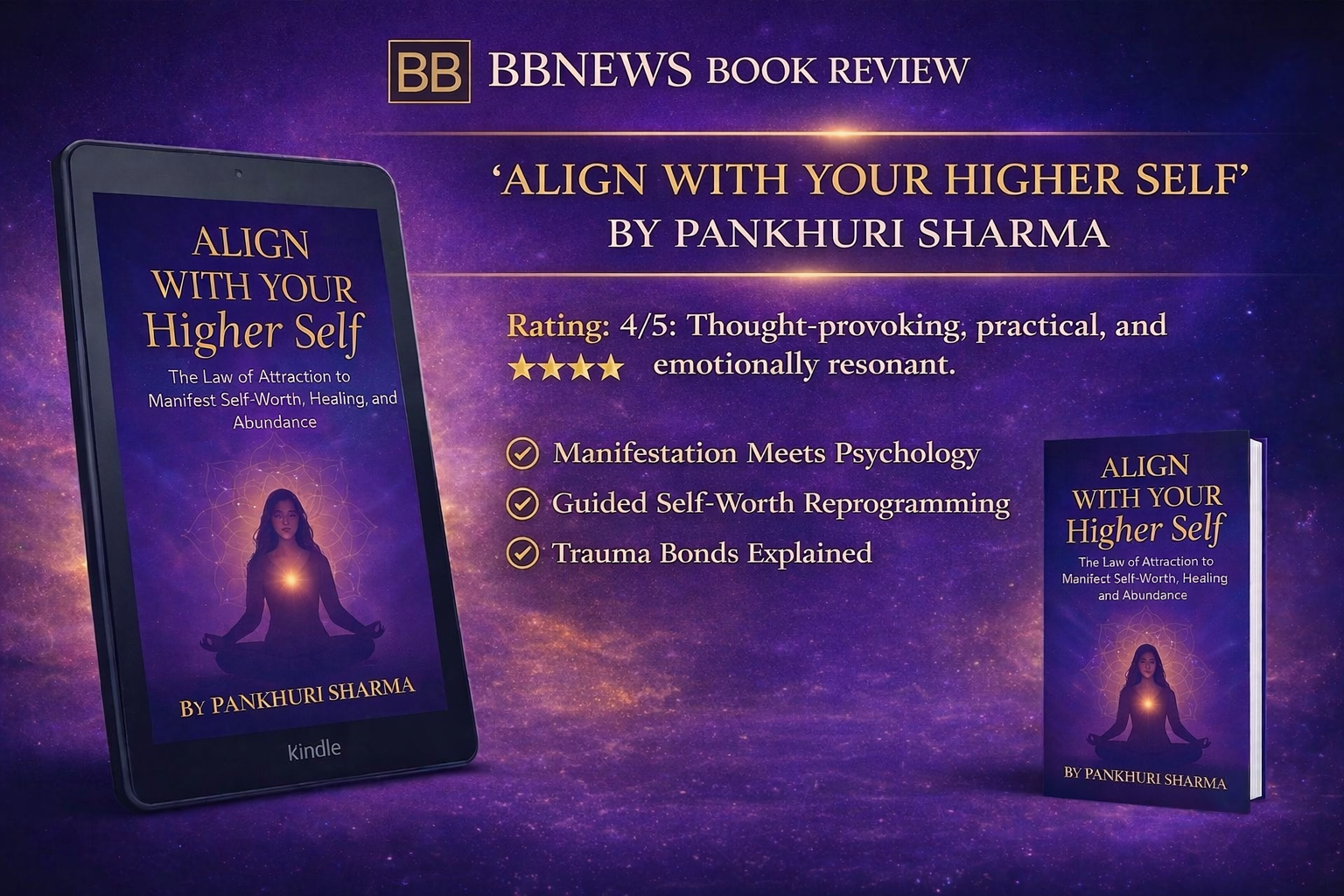
Book Review : Align With Your Higher Self By Pankhuri Sharma
In a time when words like healing, manifestation, and self-worth dominate social media conversations, Align With Your Higher Self by Pankhuri Sharma steps in with a grounded yet emotionally reflective approach. Published by Redgrab Books Pvt Ltd (December 2025), this 231-page book blends psychology and spirituality in a way that feels both accessible and introspective.
At its heart, the book presents a powerful idea: maybe we aren’t “choosing the wrong people” — maybe we are operating from subconscious patterns formed long before we knew what love even meant.
The Psychology Behind “Chasing”
One of the most compelling parts of the book explores trauma bonds — not as weakness, but as chemistry. Sharma explains how stress hormones like cortisol, combined with dopamine’s intermittent reward and oxytocin’s attachment pull, can create an addictive emotional cycle.
Suddenly, what feels like intense love may actually be a survival attachment rooted in inconsistency.
This psychological framing adds depth. Instead of shaming readers for staying in draining relationships, the book asks a more compassionate question: What if your nervous system learned that chaos equals connection?
It’s a perspective that feels both validating and eye-opening.
Self-Worth as Action, Not Just Affirmation
Rather than describing self-worth as confidence or positive thinking, Sharma defines it in practical terms:
-
The way you speak to yourself internally
-
The behaviour you accept or reject
-
The standards you set for who gets access to your time and energy
The emphasis on boundaries stands out. Over-extending yourself, over-explaining your needs, or over-investing emotionally are framed not as kindness, but as signs of subconscious conditioning.
This behavioural lens gives the book weight. It moves self-worth from something abstract into something visible.
The Inner Child & Conditioning
The chapter on childhood conditioning may resonate deeply with many readers. Sharma suggests that when children experience emotional absence or inconsistency, they may internalise the belief: “I must earn love.”
Unchecked, that belief can show up later as people-pleasing, chasing validation, tolerating mixed signals, or staying in emotionally confusing dynamics.
The workbook sections throughout the book strengthen its impact. Readers are prompted to reflect on questions such as:
-
When did you first struggle to say “no”?
-
Who drains your emotional space?
-
Do you confuse intensity with intimacy?
-
Are you chasing clarity where reciprocity is missing?
These exercises make the book interactive. It doesn’t just tell you what self-worth is — it asks you to confront where yours may have been compromised.
Where Psychology Meets Manifestation
In the later chapters, the book leans more strongly into the Law of Attraction and energetic alignment. Sharma connects subconscious reprogramming with manifestation, arguing that self-worth influences what we attract.
For readers who resonate with manifestation philosophy, this blend of psychology and spirituality will feel empowering. More analytical readers may find the earlier trauma-based discussions stronger in evidence and structure.
Still, the synthesis of both worlds is what makes the book distinctive.
Writing Style & Accessibility
The language is conversational and easy to follow. There’s no heavy academic jargon, which makes it accessible to young adults and readers beginning their self-development journey.
While seasoned readers of attachment theory may recognise familiar ideas, the strength of this book lies in how it brings trauma bonds, boundaries, inner child work, and manifestation into one cohesive narrative.
Final Thoughts
Align With Your Higher Self reads less like a traditional self-help manual and more like a guided introspection companion. It encourages readers to pause before chasing, to question inconsistency, and to redefine love through standards rather than survival instincts.
Perhaps its most powerful message is this: self-worth is not something you earn — it is something you embody.
For anyone navigating emotional confusion, validation cycles, or difficulty setting boundaries, this book offers structured reflection and compassionate insight.