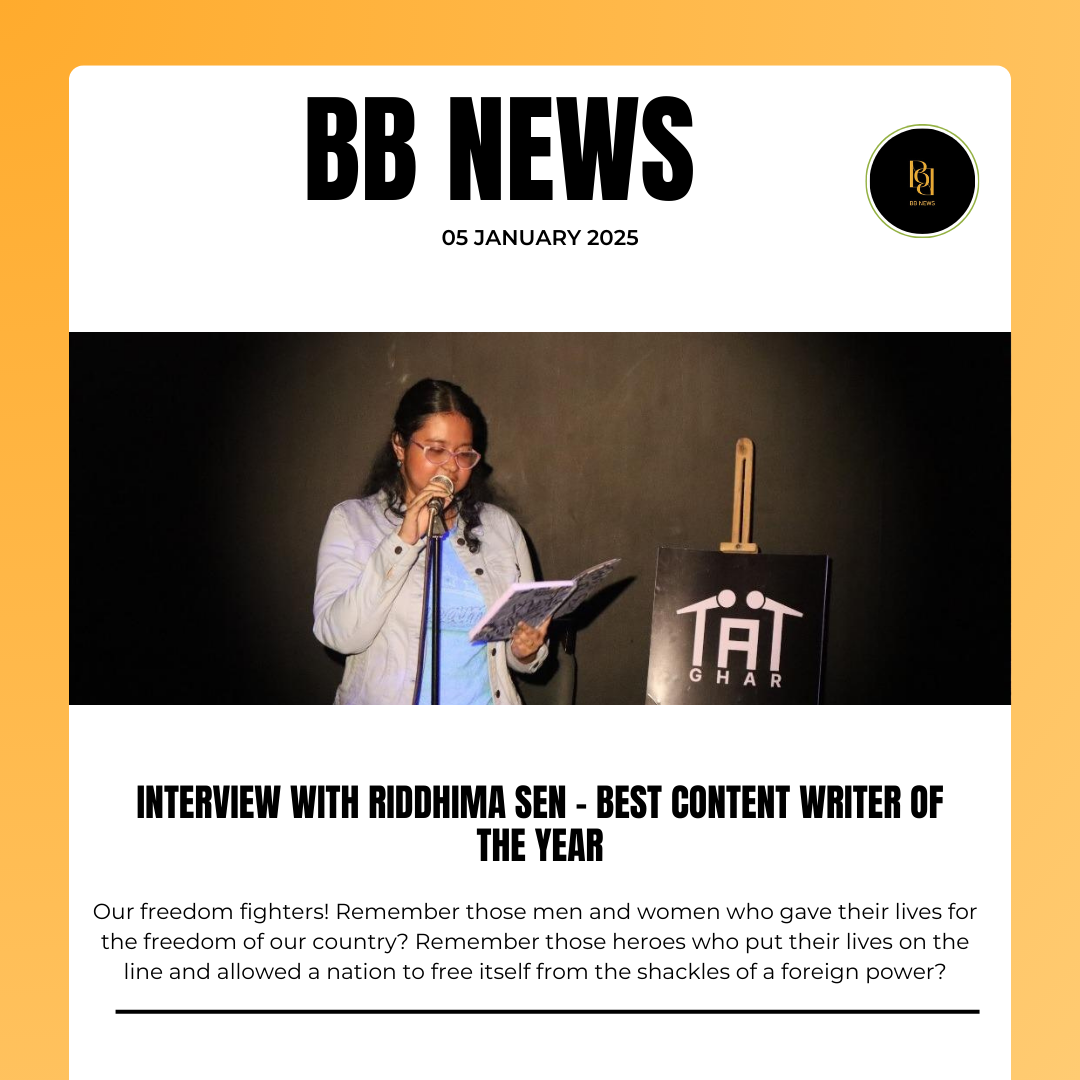
Interview with Riddhima Sen – Best Content Writer of the Year
Riddhima Sen is a multi-talented author and artist, whose works seamlessly blend her love for storytelling and visual art. With several solo books to her name, Riddhima has captivated readers with her thought-provoking short stories and evocative poetry. In addition to her literary achievements, she is an accomplished visual artist, recognized for her unique style and creative flair. Whether through the written word or her art, Riddhima’s work reflects a deep understanding of the human experience, blending emotion and imagination in ways that resonate with audiences. In this exclusive interview with BB News, we dive deeper into her creative process, inspirations, and the journey that shapes her work.
1. Your journey as both an author and artist is inspiring. Can you share how these two aspects of your creativity influence each other?
Answer:
Thank you! My journey as both an author and an artist has been incredibly fulfilling. The two aspects of my creativity are deeply intertwined. Writing allows me to express my thoughts and emotions in a structured way, while visual art lets me bring those same emotions to life through color, form, and texture. My paintings often reflect the same themes I explore in my stories and poetry, such as identity, vulnerability, and the complexities of human relationships. The act of painting also influences my writing—sometimes, when I get stuck in my words, I find that creating a piece of art can help me clarify my thoughts. I see both mediums as complementary expressions of the same ideas.
2. You have written several solo books. What inspired your first book, and how has your writing evolved since then?
Answer:My first book was inspired by a period of deep reflection in my life, where I was grappling with the concepts of loss and self-discovery. I wanted to capture the emotions of navigating difficult transitions and the moments of clarity that can arise from them. Since then, my writing has evolved to embrace more diverse themes—such as resilience, connection, and the blurred lines between reality and imagination. I’ve learned to experiment more with narrative structure, voice, and tone. The process of writing is much more fluid now, and I’ve become more comfortable with taking creative risks.
3. As a poet, you express deep emotions in your work. What themes or experiences do you find yourself exploring the most in your poetry?

Answer:
In my poetry, I often explore themes of longing, identity, and the nature of human connection. Emotions that are difficult to articulate—grief, joy, hope, and despair—are often at the center of my poems. I tend to write about moments of intense introspection or fleeting encounters that leave a lasting impression. There’s something incredibly powerful about capturing a transient feeling in a poem, allowing it to transcend time and space. My poetry is also influenced by nature and the world around me—whether it’s the changing seasons or the way light falls across a cityscape, I find inspiration in the smallest details of life.
4. Your art is known for its distinct style. How would you describe your artistic process, and what inspires your visual pieces?

Answer:
My artistic process is very intuitive. I often begin with an idea or emotion in mind, but I allow the process to unfold organically. I start with loose sketches or abstract marks, letting the piece evolve as I work. I believe art should be a dialogue between the artist and the medium—sometimes, the artwork takes me in directions I hadn’t anticipated, and that’s one of the most exciting aspects of the creative journey. My visual pieces are inspired by a combination of inner emotional landscapes and external surroundings. I draw inspiration from nature, human form, and the subtle shifts in our internal worlds. I also explore themes of abstraction and texture, allowing the physicality of paint to communicate emotions that words cannot.
5. Can you tell us about any particular challenges you’ve faced in balancing both writing and painting as a full-time creative professional?

Answer:
Balancing both writing and painting has definitely been a challenge, but it’s also what keeps my creative spirit alive. Time management is a constant struggle—sometimes, writing requires more attention, and other times, I feel the urge to create visual work. The hardest part is ensuring I give both creative outlets the space they need to flourish without burning out. I’ve learned to listen to my intuition more and follow what feels right in the moment, whether that’s writing a new poem or picking up a paintbrush. It’s important to accept that there are seasons of creativity, and sometimes one medium will take precedence over the other, and that’s okay.
6. Which of your works, whether written or visual, do you feel most connected to and why?
Answer:
It’s difficult to choose just one, but I feel most connected to my collection of poems. There’s something incredibly intimate about poetry—it feels like an unfiltered expression of self. These poems capture not just moments in time but also the rawness of my thoughts and emotions. With my visual work, I sometimes feel that I’m depicting external concepts, but in my poetry, it’s always an internal process of discovery. My favorite poem from my collection has a line that reflects this: “In silence, we become who we are meant to be.” That line encapsulates how writing, especially poetry, feels to me—a meditative process of finding meaning in the quiet spaces.
7. As a recognized artist and author, what advice would you give to aspiring creatives trying to establish their own unique voice in the literary or artistic world?

Answer:
My advice to aspiring creatives is to stay true to your own vision and voice, no matter what. The art and literary worlds can sometimes feel competitive, but the best thing you can do is focus on creating work that is authentic to you. Don’t be afraid to experiment and take risks, and embrace the idea that failure is part of the process. It’s also important to surround yourself with a supportive community of fellow artists and writers who inspire you. Finally, be patient with yourself—your voice will evolve over time, and that’s a beautiful thing. Stay committed to the work and trust that the right audience will find it when the time is right.