
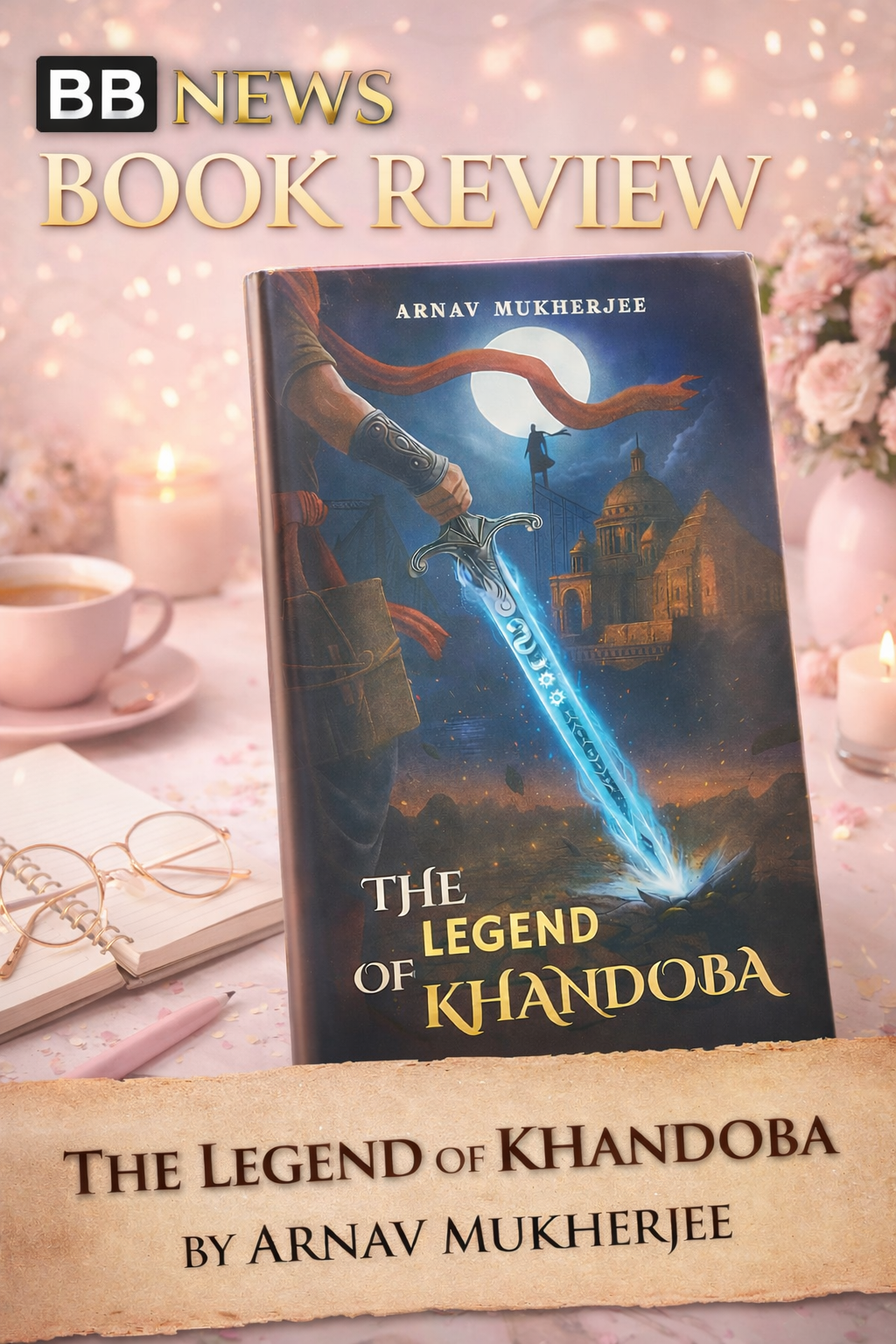
Book Review: The Legend of Khandoba By Arnav Mukherjee
What happens when power asks you to choose—not between good and evil—but between belief and balance?
The Legend of Khandoba unfolds like a forgotten myth rediscovered in the heart of modern Kolkata. At its centre is Aditya, an ordinary, exhausted young man whose life moves in routine rhythms—until fate places a blade in his path. That blade is Khandoba, not just a weapon, but a force forged from celestial metal, carrying memories, souls, and centuries of conflict.
The story begins quietly, almost tenderly, grounding itself in vivid descriptions of Kolkata’s streets, people, and everyday struggles. The city feels alive—comforting, worn, and deeply human. Characters like Sanjay, the rickshaw puller, add warmth and realism, making Aditya’s world feel familiar before it fractures into something far larger.
As Aditya encounters the mysterious beggar who introduces him to Khandoba, the novel shifts into a layered mythological fantasy. We are introduced to the Rakshaks, ancient guardians of balance between the living and the dead, and the Rakshasas, born from the same order but corrupted by power, resentment, and the belief that no one should decide who is worthy of salvation.
What makes this book compelling is that no side is entirely right or wrong. Both Rakshaks and Rakshasas fight with conviction, believing their path is just. Souls are trapped, rituals performed, and battles fought not just with weapons—but with ideology.
The blade itself becomes a living entity, demanding Aditya choose between balance and desire, compassion and destruction. Locations like Blackwood Manor, Aisha Villa, and Artheria feel symbolic—places where history, memory, and consequence collide. Every character, even spirits like Leela, plays a meaningful role in the unfolding destiny.
One of the most striking arcs is the tragic love story of Arjun, a Rakshak who falls in love with Maya, a Rakshasa. Their forbidden bond explores the idea that love alone cannot heal fractured belief systems—and that betrayal often comes wrapped in beauty and hope.
As the story progresses toward the Surya Bandhan ritual and the looming battle for the sun itself, the novel asks hard questions:
-
Can power ever be wielded without corruption?
-
Are heroes born from righteousness—or from wrong choices?
-
Is balance kinder than justice?
The writing often feels cinematic—like watching an old mythological or epic fantasy film unfold scene by scene. Nothing feels accidental. Every reveal, every betrayal, every silence carries weight.
The Legend of Khandoba is not just a fantasy novel—it is a meditation on belief, choice, and the fragile line between protector and destroyer. A story where gods are flawed, villains are understandable, and heroes are deeply human.
⭐ Verdict
A richly imagined mythological fantasy that blends modern realism with ancient legend—The Legend of Khandoba will appeal to readers who enjoy stories about power, morality, and the cost of choosing one path over another.