
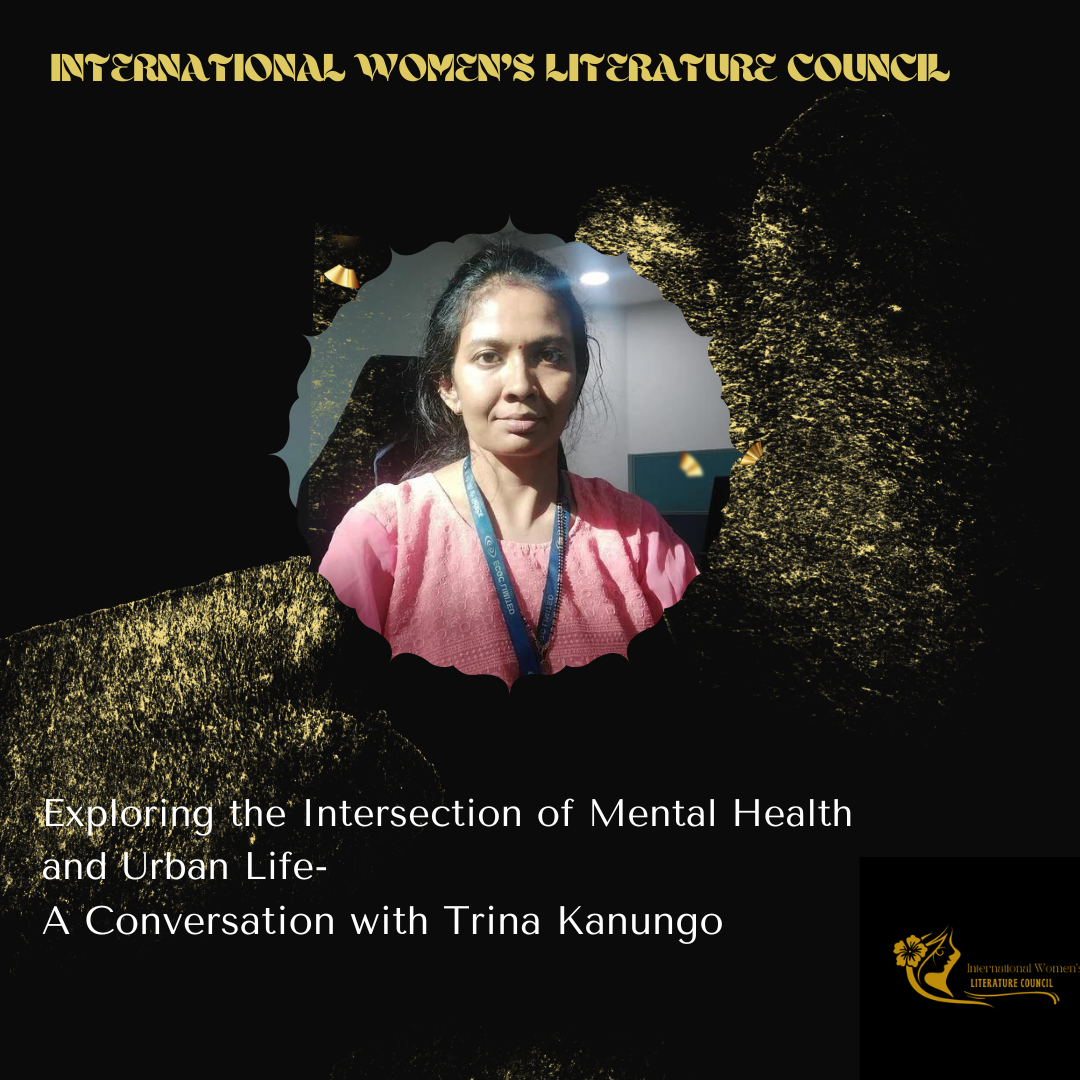
Exploring the Intersection of Mental Health and Urban Life- A Conversation with Trina Kanungo
In the bustling landscapes of metropolitan cities like Mumbai, the frenetic pace of life often intersects with the complex terrain of mental health. The amalgamation of high stress, societal pressures, and rapid urbanisation creates a challenging environment for residents to navigate their mental well-being. From the struggles of loneliness to the stigma surrounding mental illness, understanding and addressing these issues are paramount for fostering a healthier urban community.
Trina Kanungo, a resident of Mumbai, embodies the essence of resilience amidst the chaos of metropolitan life. With a profound passion for Jamini art painting and a penchant for crafting poignant narratives, Trina’s creative endeavours serve as a therapeutic outlet in her journey through urban existence. Recently, she captivated audiences with her compelling short story, “Every Cloud Has a Silver Lining,” delving into the sensitive realm of child abuse and its impact on mental health. Beyond her artistic pursuits, Trina is an advocate for mental wellness, using her platform to shed light on the intricacies of navigating mental health in a bustling cityscape. As an individual deeply entrenched in the cultural fabric of her Bengali heritage, she grapples with the dichotomy of preserving traditions like Poila Baisakh and Durga Puja amidst the cosmopolitan ethos of Mumbai. Through her multifaceted experiences, Trina offers invaluable insights into the symbiotic relationship between creativity, culture, and mental well-being in the urban milieu.

- As someone deeply immersed in both art and writing, how do you find solace amidst the cacophony of metropolitan life, especially concerning mental health?
Ans Since I am from a small town Hindmotor, it was actually difficult for me to adjust in a metropolitan ambiance. Loneliness became a daily issue for my mental health.By God’s grace, I started practising Fine Arts and my writing assignments; and it was really a blessing for me. This practice actually created a new friend circle here in Mumbai. I got to interact with so many talented personalities, and got to know about their style of work, new genre, and so many new ideas. So, I believe that everyone should always pursue their hobbies, because money is conducive to your career , but hobbies are conducive to developing your mindset towards attaining a peace attitude.
- Your recent short story, “Every Cloud Has a Silver Lining,” touches upon the sensitive issue of child abuse. How do you believe such narratives contribute to the discourse on mental health, particularly in urban settings?
Ans This short story is actually a live case study. Every bit of it is bitter truth. Till today, even in elite societies, female babies are suffering from unseen discriminations. Every girls’ stories are not like fairy tales; some of them are bitter, harsh- and that is a reality too. This case study was shared by me , to create the much necessary awareness among the parents. I pray to God, so that no other child should suffer from this pain. Parents should treat them as God’s gift, and please donot take them for granted or treat them as “commodity”!
- Metropolitan cities often exude an aura of isolation and loneliness. How do you personally combat these feelings, and what strategies do you recommend for others facing similar challenges?
Ans :Metropolitan cities are defined for their busy lives. When I cam to Mumbai, though I work in a government Insurance Company, I still had to strive hard to exist here. I still remember , I had my dinner merely in Rs.25/- only, in order to save money properly so that I could settle here hasslefree. It actually took me almost 2 years to manage my funds, and this daily struggle actually helped me to gather courage and survive here in this city of dreams. My message to all , will be, donot stop dreaming. Just work out your dreams , and reach the pinnacle of success by chasing your dreams.
- In the fast-paced environment of Mumbai, how do you manage to balance your professional commitments with your creative passions and hobbies?
Ans :Weekend time is a boon for us actually! Moreover, you need that desperation to work out for your hobbies . Since I am fitness freak too, I have been practising Yoga and meditation for 25 years, it actually helps a lot to be calm and composed and plan my schedule accordingly. I personally feel, giving time to your own self, will actually help you to start afresh for your professional life. So, utilize your weekends form yourself only, rejuvenate yourself , and pursue your hobbies during that time. And honestly , little stroll, little exercise is amust for all, as fitness is absolute necessity, no compromise is permissible!
- As someone deeply rooted in Bengali culture, how do you navigate the juxtaposition of preserving traditions like Poila Baisakh and Durga Puja within the cosmopolitan landscape of Mumbai?
Ans : Since Mumbai is a cosmopolitan city, we generally donot miss Bengali festivities at all. We have Bengali societies here too in North Mumbai, Goregaon, Andheri, Santacruz, Juhu areas, where all Bengali festivals are thoroughly celebrated. Our Bollywood stars even participate in these occasions, and that is the best part. So there is no question of compromising the celebration.
Here I wish to mention one thing, I am personally not biased towards a single state. I enjoy Dusserah, Diwali, Christmas, Ganpati festival, Gudi parwa equally. So, I personally need reason to celebrate life, that’s it.
- How do you believe societal attitudes towards mental health differ between metropolitan cities and more rural areas, and what steps can be taken to foster greater understanding and support within urban communities?
Ans: Societal attitudes towards mental health often differ between metropolitan cities and rural areas due to various factors. In metropolitan cities, there may be more awareness and discussion surrounding mental health due to greater access to resources and diversity, which can lead to increased acceptance. However, urban living’s fast-paced nature and normalisation of stress may also contribute to stigma or reluctance to seek help. Conversely, in rural areas, there may be tighter-knit communities where mental health discussions are more taboo, and resources are often limited, leading to higher levels of stigma and less understanding.

To foster greater understanding and support within urban communities, targeted efforts are essential. Firstly, comprehensive education and awareness campaigns can challenge stigma and encourage help-seeking behaviour. Integrating mental health services into existing healthcare systems and establishing community support networks can enhance accessibility and provide vital support. Culturally sensitive approaches that acknowledge diverse perspectives and experiences are crucial, as are initiatives like employer support programs and affordable, accessible services. By implementing these steps, urban communities can work towards breaking down barriers and promoting a culture of openness and support surrounding mental health.


