
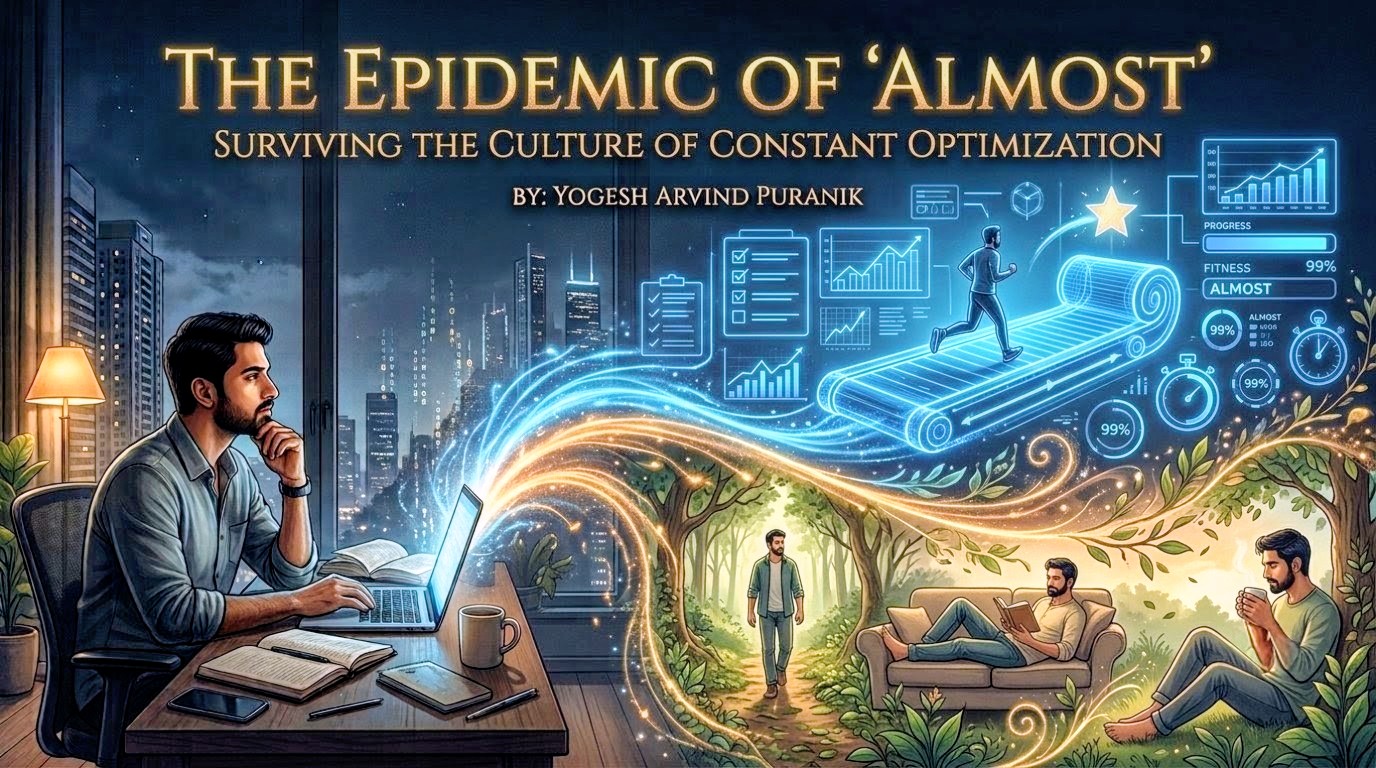
The Epidemic of ‘Almost’: Surviving the Culture of Constant Optimization By: Yogesh Arvind Puranik
We are living through an epidemic that no hospital records. It is neither viral nor bacterial, but psychological. It is the epidemic of “almost”: the chronic, tiring sense that however much we achieve, heal, or improve, we are always one habit, one app, or one morning routine away from finally becoming our “best selves.”
Notice how the language of machinery has quietly taken over the language of life. We no longer rest; we “optimize recovery.” We do not read; we “consume high-yield content.” Even our Tuesdays are measured against an invisible return on investment. A vast self-improvement industry has persuaded us that we are not whole people living untidy, unfolding lives, but flawed projects in need of relentless troubleshooting.
This culture is corrosive because it rests on scarcity. It insists that our present state, with its fatigue, its small neuroses, and its unremarkable afternoons, is a problem awaiting a solution. It whispers that joy, peace, and worthiness are waiting on the far side of a perfectly executed 5:00 a.m. routine or a flawlessly curated diet.
But the destination is a mirage. Psychologists have long described the “hedonic treadmill”: we adapt quickly to each new achievement, and the goalposts move with us. The “best self” is a horizon. We can walk toward it forever, and it will keep its distance.
The cost of that walk is real. Studies of perfectionism, including a 2019 analysis by Thomas Curran and Andrew Hill, suggest that the demands young people place on themselves, and believe others place on them, have risen markedly in recent decades. Their research ties that rise to anxiety and depression. Barry Schwartz and colleagues found that “maximizers,” people who must always secure the best possible option, tend to report less happiness and more regret than those who settle for what is good enough. The pursuit of the best, it seems, does not reliably deliver it. It delivers the feeling of “almost.”
Something subtler is lost as well. When every act must serve self-betterment, we forget how to live without a purpose. We cannot read a novel for the music of its sentences without hunting for the takeaway. We cannot take a walk without counting steps. We cannot even grieve without hurrying to find the “lesson,” as though sorrow were a badly managed asset. Oliver Burkeman calls this the efficiency trap: the faster we clear our tasks, the more tasks arrive. Many of the best things in life resist being made efficient. Friendship, play, rest, and wonder are not productive, and that is the point of them.
It is worth being fair here. The wish to grow is not a disease. It is one of the finest human instincts, and some habits do help: sleep, movement, and a good book have earned their reputations. The trouble begins when growth turns into a verdict, when we improve ourselves out of dread rather than curiosity. The old distinction between growth and optimization matters. Growth is organic and seasonal, and it tolerates fallow periods. Optimization is mechanical and permanent, and it treats every pause as waste.
So what is the way out? Not apathy. Giving up the tyranny of the “best self” does not mean surrendering to stagnation or mediocrity. It means changing where our effort comes from. The psychologist Kristin Neff has argued, and a number of studies support her, that self-compassion does not weaken motivation. People who treat their own failures with kindness are often more willing to try again, because failure no longer feels like a judgment on their worth. Self-determination theory points the same way: effort that comes from interest and meaning lasts longer than effort driven by pressure and shame.
The practice can be small. Walk without tracking it. Finish a book that will not make you more productive. Let one evening be wasted, deliberately and without apology. When the old voice asks what you are getting out of it, answer that you are getting an evening. Choose “good enough” now and then, and notice that the world does not collapse.
We are not software awaiting an upgrade. We are people, flawed and unfinished, and worthy long before the sun comes up on our morning routine. The self we keep chasing was never missing. It was waiting for us to stop long enough to meet it.